Training-Free 360° Panorama Generation
CodeProgressive inpainting via equirectangular projection based on Meta's 2025 ICCV paper "A recipe for generating 3D worlds from a single image"
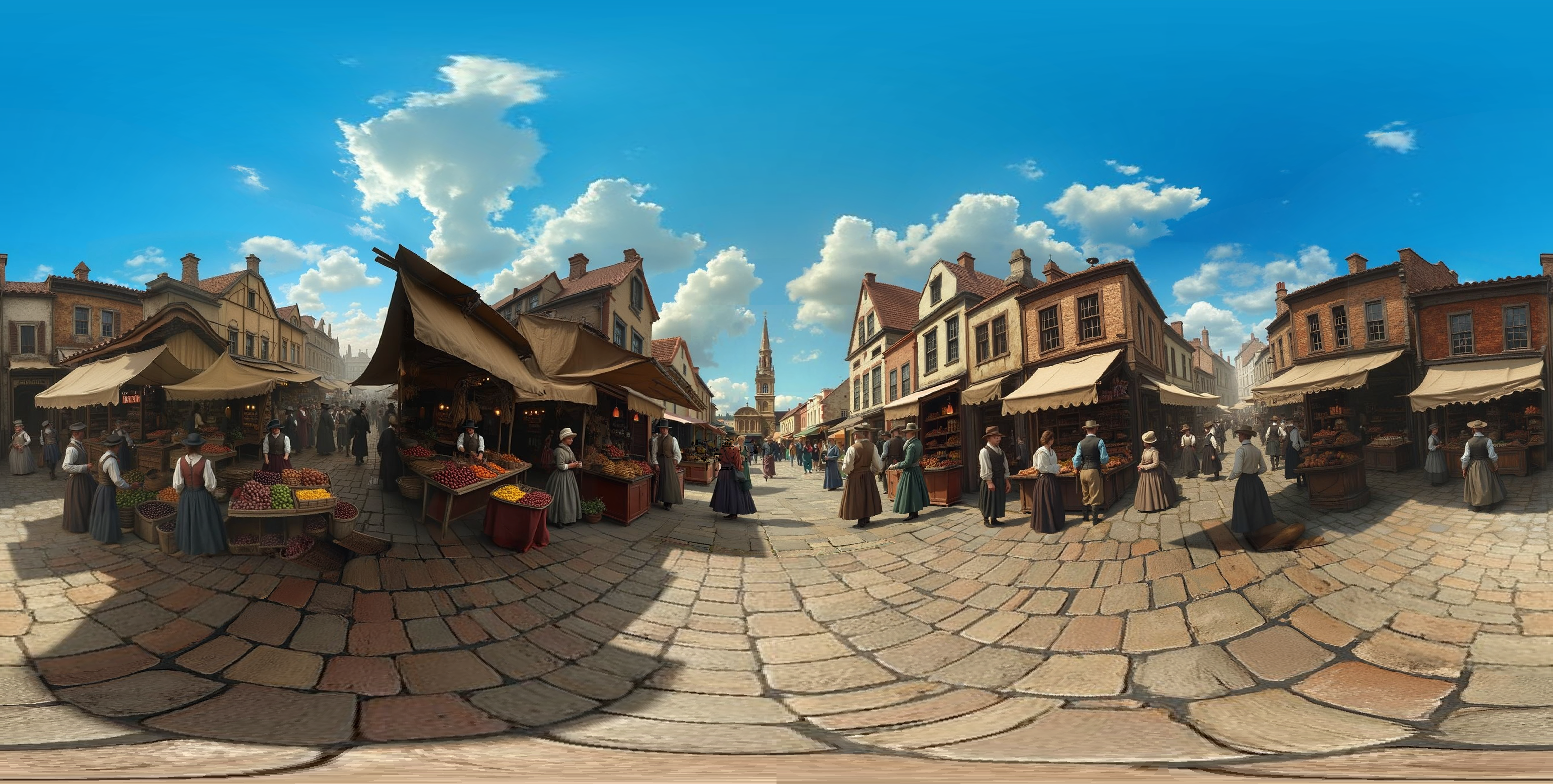
This project implements a training-free 360° panorama generation pipeline using equirectangular projection and progressive inpainting, based on the Meta 2025 paper “A Recipe for Generating 3D Worlds From a Single Image”.
Method Overview
The approach uses a progressive inpainting strategy with equirectangular projection to generate complete 360° panoramas from text prompts or input images.
Panorama Synthesis Process
1. Equirectangular Projection
The input perspective image is embedded into an equirectangular panorama by converting pixel coordinates to spherical coordinates ($\theta$, $\phi$) and then to equirectangular coordinates.
2. Progressive Inpainting - “Anchored” Strategy
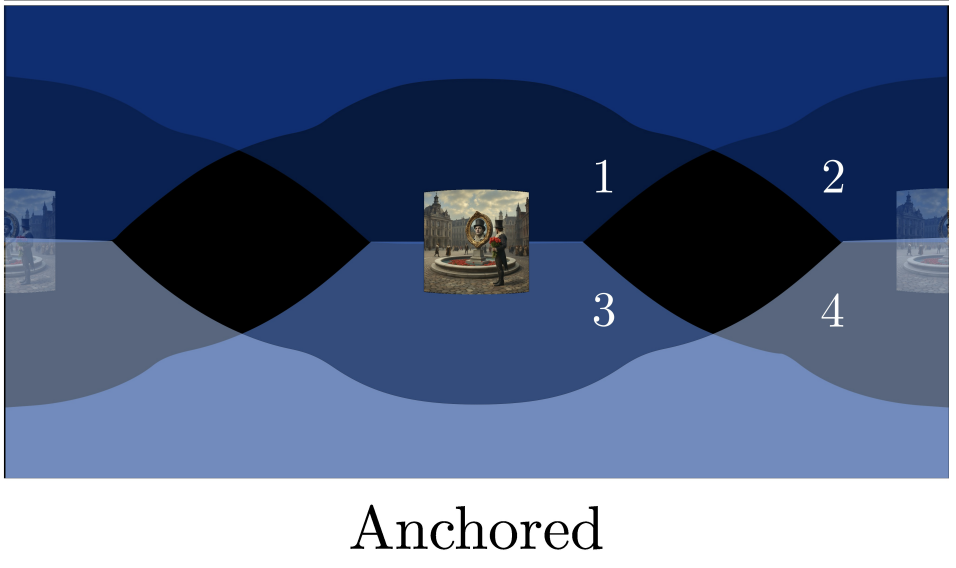
The method implements an “Anchored” synthesis strategy:
- Step 1: Input image is duplicated to the backside of the panorama to anchor the synthesis
- Step 2: Separate prompts are generated for sky and ground regions using a vision-language model
- Step 3: Synthesis begins with sky and ground generation to maximize global context
- Step 4: Backside anchor is removed and remaining regions are generated by rendering and outpainting perspective images
- Multiple overlapping perspective views are rendered:
- 8 images with 85° FoV for middle region
- 4 images each with 120° FoV for top/bottom regions
The iterative generation of a panorama is shown down below :
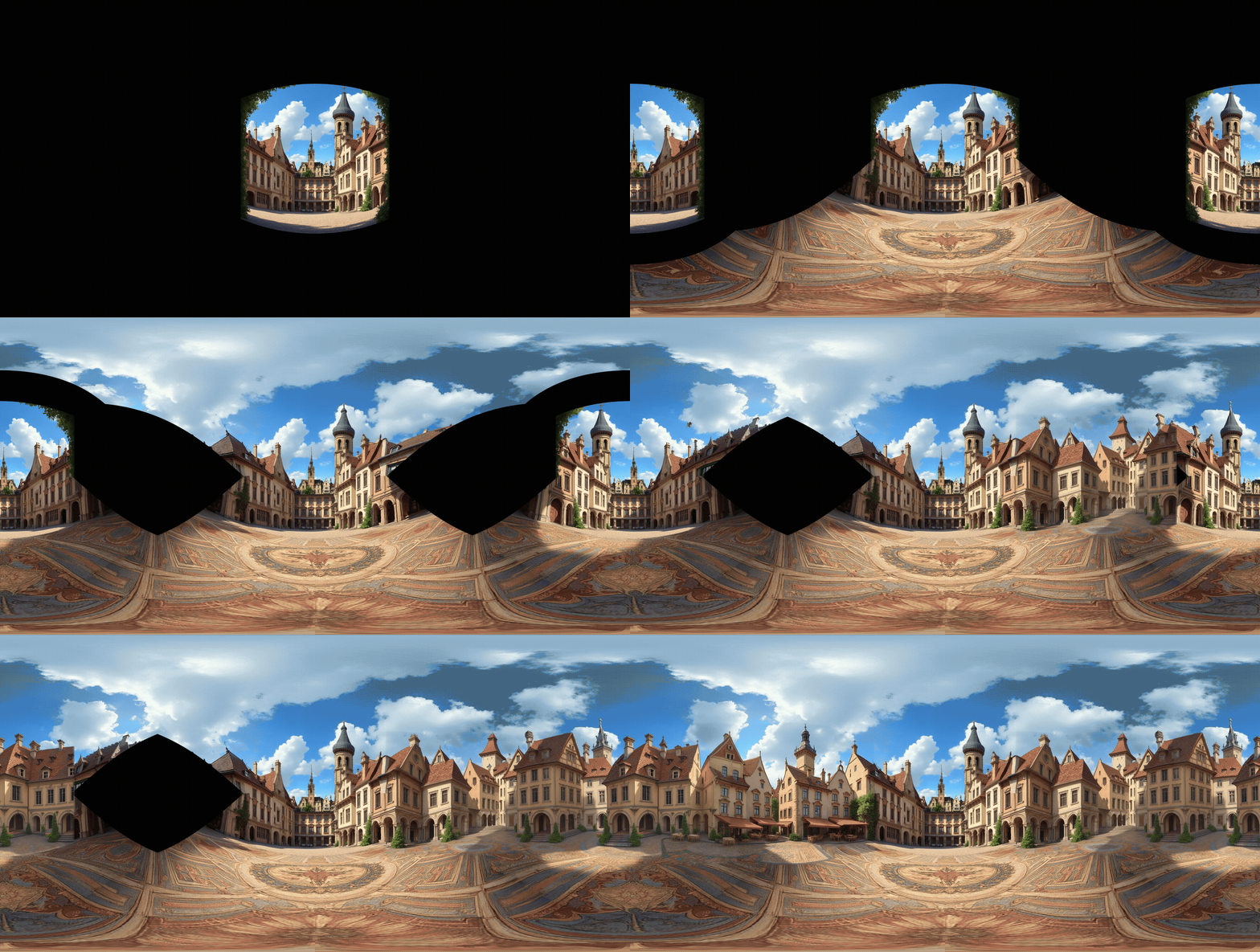
3. Inpainting Network
Uses a ControlNet-based inpainting model conditioned on masked input images, based on FLUX-ControlNet-Inpainting.
4. Refinement
Optional partial denoising process is applied to improve image quality and ensure smooth transitions between inpainted regions.
Results
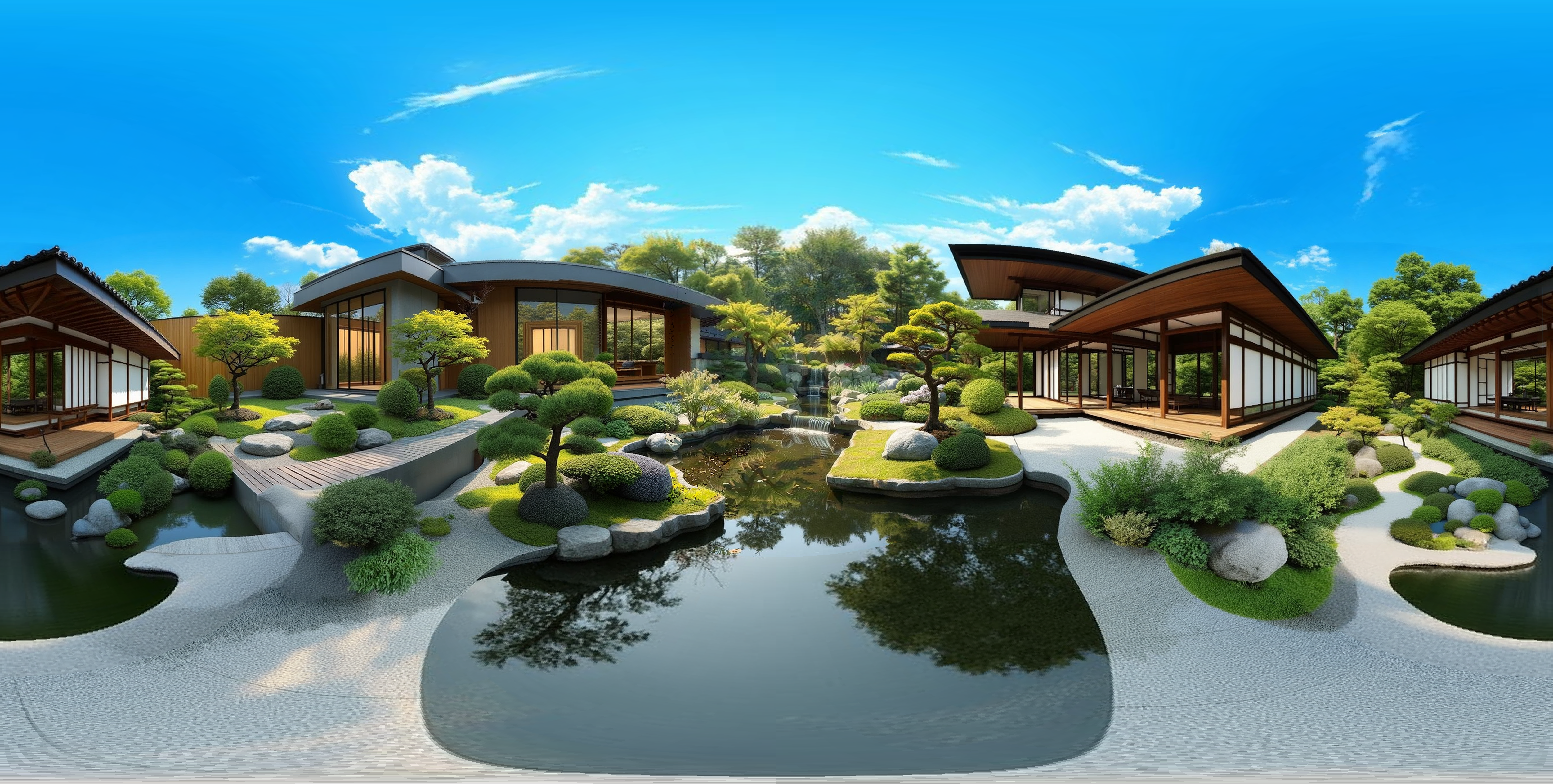
The method successfully generates high-quality 360° panoramas with smooth transitions between regions. The progressive inpainting strategy ensures consistency while maintaining local detail. However, customly trained models can achieve higher fidelity and better global prompt consistency and alignment. Nevertheless, this method demonstrates the effectiveness of leveraging out of the box T2I models and combining it with the equirectangular representation to achieve reasonably good results.
Note: Due to consecutive creation of multiple images to fill the equirectangular 360° layout, generation takes several minutes (multiple inference runs of the FLUX-Dev Inpainting ControlNet model).
Summary
The approach enables the generation of 360 panoramas by utilizing the equirectangular mapping and inpainting networks in a training-free fashion, enabling the use of large scale T2I networks without training on panorama images. The generated panoramas can also scale past the resolution of standard T2I models as they progressively inpaint. However, this strategy leads to slower generation times and potential limitations in blending or global prompt following.
References
- Schwarz, Katja, et al. “A Recipe for Generating 3D Worlds From a Single Image.” International Conference on Computer Vision (ICCV), 2025, https://arxiv.org/abs/2503.16611.